
How three minutes in ice water is rewiring the brains — and bodies — of elite athletes, military commanders, and the rest of us.

There is a moment, about thirty seconds into a cold plunge, when every instinct in the human body screams to get out. The skin contracts. The breath catches. The mind narrows to a single, furious command: escape. And then — for those who stay — something extraordinary happens. The nervous system recalibrates. The noise falls away. And clarity arrives like a wave.
Cold exposure is no longer the exclusive domain of Scandinavian winter swimmers or elite sports recovery rooms. It has crossed over — emphatically — into the mainstream of performance culture, preventive medicine, and daily wellbeing ritual. Driven by a growing body of scientific research and championed by Olympic legend Michael Phelps through his Chilly GOAT Cold Tubs line, the cold plunge has become the defining wellness practice of this decade.
The reasons, it turns out, are profound.
“If you can sit in discomfort and stay calm, you can take anything life throws at you. That confidence doesn’t stay in the tub — it carries over into everything.” – Cold Exposure Research, Chilly Goat Cold Tub
Why Cold Exposure is Exploding Right Now
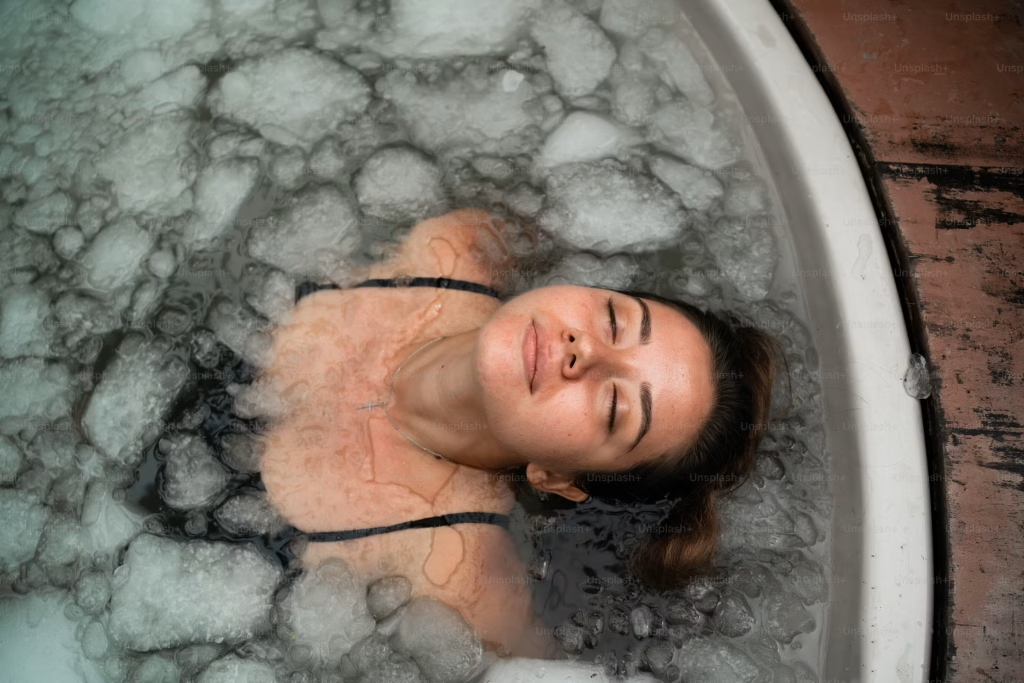
The shift began in elite sport — ice baths in Olympic training facilities, cryotherapy chambers in Premier League dressing rooms — but has migrated with remarkable speed to the everyday performer. The triggers are several: we are living through a mental health crisis that has made stress resilience a public priority; the biohacking movement has pivoted away from supplements and nootropics toward environmental interventions that are simpler, cheaper, and more potent; and a generation fatigued by expensive optimization tools is rediscovering the power of basic, ancient practices.
Cold water. Sustained discomfort. Voluntary breath control. The tools cost almost nothing. The returns are extraordinary.
11–16 min – Proven weekly duration for measurable physiological benefit
13°C – Recommended starting temperature for beginners
3 min – Minimum effective single session for new practitioners
The Science of the Cold Body
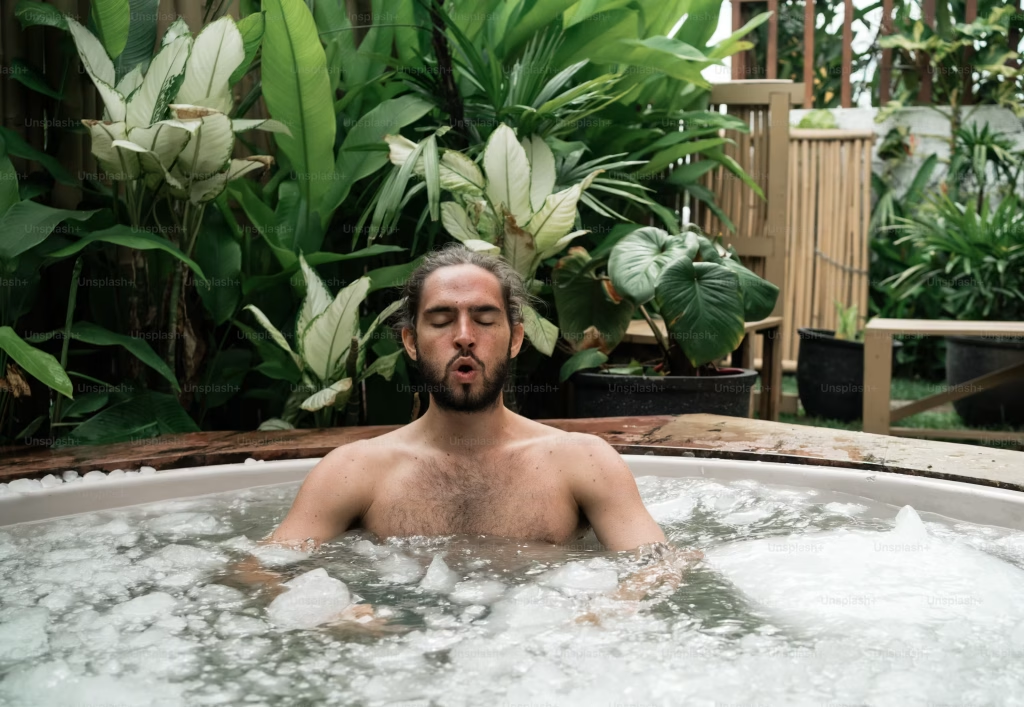
When the body enters cold water, both the sympathetic and parasympathetic nervous systems are activated simultaneously — a physiological duality that is nearly impossible to replicate through any other means. The sympathetic system fires the fight-or-flight cascade; adrenaline surges, heart rate climbs, attention sharpens to a point. And yet the cold demands stillness. The practitioner who learns to breathe slowly and stay present is, quite literally, training their nervous system to find calm within chaos.
The downstream effects are systemic and well-documented:
- Nervous System Regulation – Simultaneous activation of sympathetic and parasympathetic pathways builds lasting autonomic resilience and stress tolerance.
- Dopamine Architecture – Cold immersion produces a prolonged dopamine spike — not the sharp crash of stimulants, but a sustained elevation lasting hours after the plunge.
- Cortisol Management – Regular practice trains the body’s cortisol response, reducing chronic stress hormone elevation and improving emotional regulation.
- Inflammation & Recovery – Dramatic reductions in DOMS (delayed onset muscle soreness) and systemic inflammation, particularly valuable for those over 45.
- Cognitive Performance – Both the U.S. Army and Navy are actively researching cold exposure protocols for cognitive function enhancement under operational stress.
- Sleep Architecture – Evening cold plunges (taken at least two hours before bed) have been shown to deepen slow-wave sleep and improve overall sleep quality.
- Metabolic & Immune Function – Cold triggers thermogenesis, increasing metabolic rate; concurrent immune system stimulation reduces susceptibility to illness over time.
- Hormonal & Skin Health – Improved circulation, hormonal balance support, and vasoconstriction-driven skin benefits including improved tone and reduced puffness.
Brain Health & The Military Edge

Perhaps the most compelling frontier in cold exposure research is cognitive. Both the U.S. Army and U.S. Navy are actively investigating cold immersion protocols as tools for enhancing mental performance under duress — not merely physical recovery, but the preservation of clear decision-making, emotional control, and executive function when the body is under extreme stress.
The mechanism is elegant. Cold water forces the practitioner to override instinct — to stay when every signal says run. This process of deliberate override strengthens the prefrontal cortex’s dominance over the amygdala. People who cold plunge regularly become better at managing their fear response. They make clearer decisions under pressure. They recover faster from emotional disruption.
Practitioners speak of the daily hard thing principle. By doing something genuinely difficult first thing in the morning, you set a neurological tone for the entire day. Challenges that arrive later feel comparatively manageable.
As Ben Gilliam puts it: “If you can take this, you can take anything. If you can be comfortable being uncomfortable, you can be that way all your life.”
The confidence earned in cold water doesn’t stay in the tub — it carries over into everything.
Both the U.S. Army and U.S. Navy are actively researching cold exposure protocols specifically for cognitive function — examining how regular cold immersion preserves decision-making capacity, emotional regulation, and mental clarity under operational stress.
The Confidence Carryover Effect
There is a psychological phenomenon practitioners describe consistently: the confidence earned in cold water does not stay in the tub. The ability to face something objectively difficult, to stay present through discomfort and emerge composed, translates directly into how people move through the rest of their lives. Difficult conversations feel less daunting. High-takes decisions become clearer. The implicit message the nervous system receives, day after day, is: I can handle hard things.
Rewiring the Stress Response
Cold plunging does not eliminate the stress response — it trains it. The
body still sounds the alarm when submerged; what changes is the
practitioner’s relationship to that alarm. Over weeks and months of
consistent practice, the gap between stimulus and response widens.
Equanimity — genuine, embodied equanimity — becomes not an
aspiration but a trained capacity. This is why cold exposure has found
such resonance in an era defined by anxiety: it others a genuinely effective antidote, grounded not in pharmacology but in physiology.
How to Actually Do It

The barrier to entry is lower than most people assume. A bathtub with 15–20 bags of ice is a perfectly legitimate starting point. The protocol matters far more than the equipment.
Beginner Protocol – Week one
- Starting Temperature – Begin at 20°C. This is cooler than room temperature but not yet a shock. The goal is acclimation, not heroism.
- Duration – Start with 3 minutes per session. Resist the temptation to push further in the early weeks. Consistency beats intensity.
- Progression – Reduce temperature by 1°C each session. By week 3–4, aim to reach 13°C — the scientifically established threshold for meaningful physiological effect.
- Weekly Volume – Target 10–12 minutes of total cold immersion per week. Research confirms this range produces measurable benefit. The proven optimal range is 11–16 minutes weekly.
- Submersion Depth – Shoulders and neck must be submerged — collar bone and above. Legs and arms fully inside. Peripheral immersion alone does not activate the full systemic response.
- Breath Work – Deep, slow breathing is not optional — it is the practice. The moment you can slow your exhale, you have won. Nasal breathing where possible; long slow exhales to activate the parasympathetic system.
Morning, Evening & The Timing Question

When you plunge matters as much as how. Morning cold exposure —
ideally within two hours of waking — delivers the dopamine spike and
cortisol optimization benefit at the most useful point in the circadian
rhythm. The mental clarity and motivational lift arrive precisely when the day demands them.
Evening plunging, however, carries its own powerful benefit: sleep
deepening. Cold immersion triggers a subsequent rebound in core body
temperature that facilitates the thermoregulatory drop required for deep, restorative sleep. The key constraint is timing — allow at least two hours between the plunge and sleep onset for the thermal rebound to complete its cycle.
The recommendation is simple: choose the time you will actually do it,
consistently. The best protocol is the one that becomes a habit.
Age-Specific Guidance: For athletes under 25 training at high intensity, avoid old immersion immediately post-workout — the inflammatory response is part of the adaptation signal. Wait at least six hours after intense training before plunging. For those over 45, the calculus inverts entirely: post-exercise cold immersion is highly beneficial, given the disproportionate inflammatory burden of aging. Start at 13°C for 3 minutes and build from there.
The Biggest Beginner Mistakes
The most common error is the one that stops people before they begin:
starting too cold. Ten degrees Celsius feels like punishment to an unacclimated body. It creates a negative association that derails consistency before the practice has a chance to take root. Begin at 20°C. It is still cold. It still counts.
The second error is inconsistency — treating the cold plunge as an
occasional event rather than a daily discipline. The research is clear that
weekly volume (11–16 minutes) distributed across multiple sessions is
what produces lasting neurological and physiological change. One long session a week is less effective than four short ones.
The third error — less discussed but equally significant — is going
without guidance. A knowledgeable coach or experienced practitioner
can compress months of tentative self-experimentation into a matter of
weeks. The body adapts faster when it is taught correctly from the start.
Start at 13°C. Stay for three minutes. Breathe slowly. Return tomorrow.
“The water is the same temperature every morning. You are not. That is the entire practice.” – Cold Exposure Philosophy
At-Home Cold: What You Actually Need

For those without access to a dedicated cold tub, the bathtub and a
quantity of ice is a perfectly legitimate starting point. Fifteen to twenty
bags of ice will bring a standard bathtub to the appropriate temperature
range. It is not glamorous. It works.
For those ready to invest, purpose-built cold plunge tubs — such as the
Michael Phelps Chilly Goat Cold Tubs — offer precise temperature
control, filtration, and the durability for daily practice. The protocol used in the Chilly Goat research protocol begins at 10°C for five minutes per week — an advanced target to work toward, not a starting point.
Whether the vessel is a $50 stock tank or a premium stainless plunge unit, the physiological response is identical. The cold does not care about the container.
Cold immersion carries contraindications for individuals with certain cardiovascular conditions. Consult a physician before beginning any cold exposure protocol, particularly if you have a history of heart disease, Raynaud’s syndrome, or peripheral vascular conditions.
Ben Gilliam
Chilly GOAT Cold Tubs & Sweaty GOAT Saunas
Commercial Rep — Michael Phelps / Master Spas
📞 203-509-8066
✉️ beng@MasterSpas.com
✉️ GOATguide@ChillyGOATtubs.com
🌐 ChillyGOATtubs.com
Leave a Reply