

As New York Fashion Week approaches (September 11–16), the city is once again buzzing with anticipation. Alongside the runway showcases of American heritage brands, another cultural highlight has taken center stage the Metropolitan Museum of Art’s Costume Institute exhibition, “Superfine: Tailoring Black Style,” a powerful ode to the history and influence of the Black Dandy.

Rooted in 18th- and 19th-century traditions, the Black Dandy aesthetic reflects resilience, identity, and artistry. Born from a history where enslaved men were forced into rags, they transformed suffering into style — creating a distinct language of dress, personality, and presence. The exhibition, inspired by Monica Miller’s book Slaves to Fashion, breaks down the aesthetic into twelve principles: ownership, presence, distinction, disguise, freedom, champion, respectability, jook, heritage, beauty, cool, and cosmopolitanism.

This year’s MET Gala served as the launch for the exhibition, with Black Dandyism as its central theme. Chaired by Colman Domingo, Lewis Hamilton, A$AP Rocky, and Pharrell Williams, and steered by Condé Nast’s Global Artistic Director, Anna Wintour. The event brought global attention to a cultural movement that continues to shape fashion, identity, and creativity.

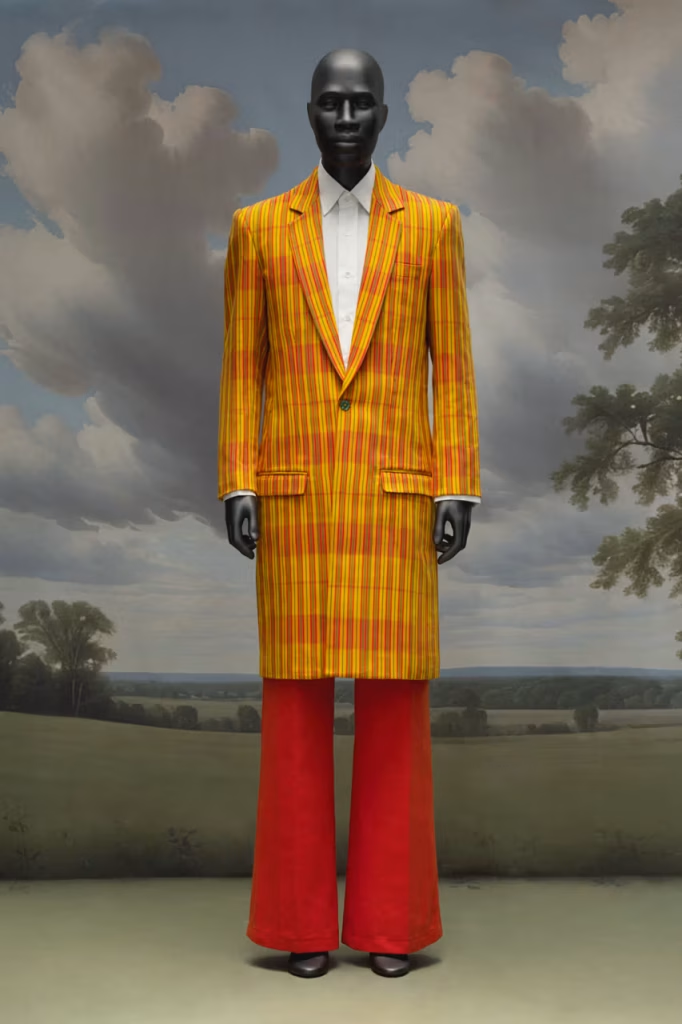
Among the designers showcased is Samuel Boakye, the Ghanaian-American creative behind the New York–based label Kwasi Paul. His piece, the Odyssey Trench Coat, merges heritage and innovation, speaking directly to the exhibition’s spirit.
Jeffrey A: How does your Ghanaian heritage tie into the theme of the Black Dandy at the MET Exhibit?
Samuel Boakye: “The Odyssey Trench Coat was inspired by the ‘Ghana Must Go’ bags. We switched the colors to more of a spice-inspired palette, tied to the African market. The trench coat has a throwback feel with tailored lapels and heirloom construction — techniques passed down through generations in my culture. Both the fabrication and nostalgia went into the tailoring.”
Jeffrey A: How do you feel your brand exemplifies the conversation surrounding Black creatives and the attention it has received internationally?
Samuel Boakye: “I can only speak from my point of view as a first-born Black African-American. I live in between two worlds — society as an African-American, but also deeply connected to my cultural roots. I feel like those stories, the first-generation immigrant experience, aren’t often represented. So I see it as both a gift and a responsibility to bring that voice into the conversation. I think we play a huge role in creating that bridge.”

The exhibition reaffirms fashion’s role as more than clothing it is identity, resistance, and legacy. By weaving Ghanaian heritage into New York’s fashion narrative, Boakye represents not just personal creativity but also a global dialogue on the future of Black style.
Leave a Reply